


Offer
Provide additional details about the offer you're running.
FLASHSALE
This store requires javascript to be enabled for some features to work correctly.


Last Updated: October 19, 2026
Learning how to prevent hair extensions from frizzing starts with knowing that frizz happens when dry strands lift and swell, grabbing moisture from the air and roughening the cuticle. The fix isn't a miracle product but a routine that keeps moisture in and heat and friction down. Frizzy extensions are almost always washed too hard, brushed too roughly, or dried with too much heat.
Four things drive most frizz in hair extensions:
Human hair extensions are the most forgiving, but they still frizz when moisture drops. Synthetic hair has its own limits, covered below.

Wash extensions gently in cool water with a moisturising shampoo, and never scrub the wefts. A slow, careful wash protects the cuticle and locks in moisture.
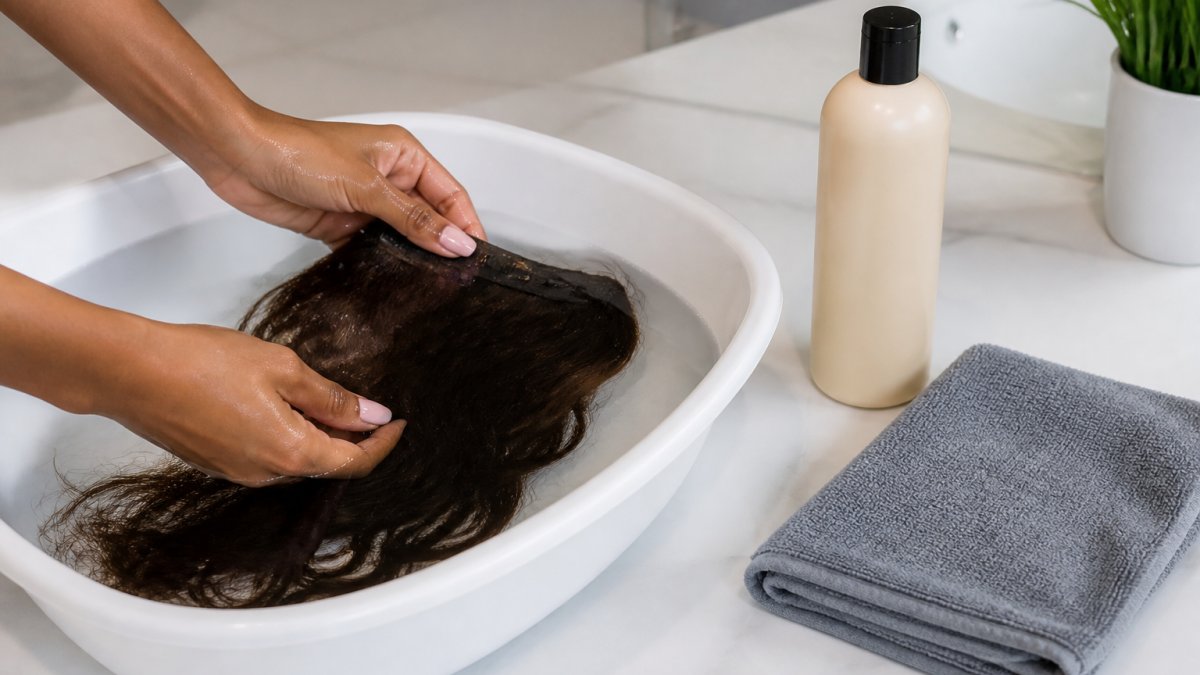
Wash extensions no more than once a week, or every second week if you can stretch it.
Detangle hair extensions from the ends upward, using a wide-tooth comb or extension brush, on dry or damp hair, in small sections. Ripping a brush from root to tip breaks the cuticle and creates instant frizz.
Work in this order:
A common mistake is brushing extensions like your own hair. With no scalp oils to lubricate the strands, they snag more, so slow down and use a gentler tool.
Keep extensions soft between washes with a light leave-in conditioner, a few drops of oil on the ends, and overnight protection. Small daily habits matter more than any single product.
Try these between-wash habits:
Our Water Wave Clip-In Human Hair Extensions are 100% real human hair, so they respond well to leave-in products and light oils, and hold moisture better than synthetic.
Fix dry, frizzy human hair extensions with a deep conditioning mask, a cool-water rinse, and a break from heat. Genuine damage can't be fully reversed, but you can restore a lot of softness.
Run this reset routine once a week:
Choose products with moisturising ingredients and limit heavy silicones.
Reach for:
Avoid or limit:
Silicone isn't evil; it adds shine and smooths the cuticle for a while. The problem is buildup. If extensions feel coated and dull, clarify them and start again.
Water Wave Clip-In Human Hair Extensions | Wet & Wavy | 8pcs 120g Set →
Prevent post-wash frizz by air-drying when you can, using a hairdryer on low heat with a diffuser, and always applying heat protectant before styling. Humidity is the wild card, so plan for it with the drying sequence, heat rules and humidity strategy below.
Humidity frizz happens because dry hair is porous: moist air makes dry strands pull in moisture, the cuticle swells and lifts, and the surface roughens. Extensions are more vulnerable because they no longer receive sebum from the scalp. The fix is to keep internal moisture balanced so the hair has less appetite for atmospheric moisture, and to smooth the cuticle so there is less surface area to grab.
Look for: glycerin and other humectants, light oils such as argan or camellia, and water-based rather than alcohol-heavy heat protectants.
Avoid or limit: alcohol-heavy styling products, which dry the hair and make it more porous; heavy silicone layers, which build up and leave the hair dry underneath; and anything with a strong fragrance or drying solvent near tape bonds, as these can soften adhesive.
Different extension types need different care because the attachment method and fibre composition change what can go wrong.
| Extension Type | Wash Frequency | Key Care Point | Heat Styling | Main Risk |
|---|---|---|---|---|
| Clip-ins | Weekly | Detangle before washing; wash separately from your own hair | Low to medium heat | Cuticle roughening from friction |
| Wefts (sewn) | Weekly to fortnightly | Keep shampoo and conditioner off the roots and weft | Low to medium heat | Product buildup at the weft causing slippage |
| Tape extensions | Fortnightly | Avoid oil, conditioner and heat near the bonds | Low heat only, keep tools away from bonds | Bond softening and slippage |
| Synthetic | Fortnightly | Lukewarm water, gentle sulphate-free products | Usually none; check the label | Heat melting or crimping the fibre |
Clip-ins. Removable clip-ins are the easiest to care for.
Tape extensions. The adhesive bonds are the weak point: oil, silicone-heavy conditioner and direct heat soften the tape, letting extensions slip or lift at the edge.
Frizz at the attachment point usually signals a care mismatch rather than dryness.
Persistent frizz that won't settle after a deep condition usually signals damage, not dryness, and sudden frizz after styling often means heat damage.
Watch for these signs:
If you see these signs, book in with an extensionist. A professional can check the hair, trim damaged ends, and tell you whether the extensions can be saved or replaced.
If you're investing in new extensions, our Signature Glamour Package and Luxury Mid-Back Package use premium human hair bundles built for repeated styling and washing, which gives you a better starting point for frizz-free wear.


For general guidance on caring for human hair, the international standards for textile and hair product labelling can help you read product labels more carefully, and consumer product safety guidance is worth checking before buying any new hair product.
Wash clip-in extensions every 6 to 10 wears, and installed wefts or tape extensions roughly once a week to every 10 days. Over-washing strips moisture from the cuticle and leaves hair feeling like straw, while under-washing lets product buildup and natural oils attract dirt and cause tangles. Use a sulphate-free moisturising shampoo in cool water, condition the mid-lengths and ends, and always dry the weft or bond area completely. If you sweat heavily or use a lot of styling product, wash a little sooner rather than letting buildup sit.
Straw-like texture usually points to one of four things: heat damage from straighteners or dryers used without a heat protectant, product buildup from silicone-heavy serums, washing in hot water, or a cuticle that has already been stripped from over-processing. Clarify once with a gentle chelating wash, swap heavy silicone serums for a lightweight argan or coconut oil on the ends only, and add a deep conditioning mask every second wash. Human hair extensions that stay rough after that are often past saving and need replacing.
Yes. Straighteners and curling wands set above 180°C break down the cuticle of human hair extensions, and synthetic fibres can melt or crimp permanently. Always apply a heat protectant first, keep tools at the lowest effective temperature, and never hold heat on one section for more than a few seconds. Air-drying or using a hairdryer on a cool setting with a diffuser is the safest way to dry extensions. Limiting heat to once or twice a week makes a visible difference to softness and shine within a month.
Reach for a sulphate-free moisturising shampoo, a silicone-free conditioner, a weekly deep conditioning mask, and a lightweight leave-in conditioner or argan oil applied to the ends only. Avoid heavy silicone serums near the clips or bonds, because they loosen attachments and trap dirt. A heat protectant is essential before any blow-drying or straightening. For clip-ins such as the Water Wave Clip-In Human Hair Extensions, a little water mixed with curl cream revives the wave without weighing the hair down.
Frizz in extensions is a moisture and handling problem, not a mystery. Build a gentle wash routine, detangle from the ends, protect the hair overnight, and go easy on heat. If you want expert help choosing or caring for extensions, get started with Big Star Hair & Beauty and book a consultation with our stylists.
"Show off incredible feedback from your customers"